
I just completed the above titled book by Jess E. Weiss, a 91 year old veteran of World War II. He was in the second wave of the Omaha beach landing on D-Day. I strongly recommend this book (available on Amazon) A few excerpts:
The beach was congested with the dead and wounded. . . . There wasn't a pebble to hide behind. I crawled under the bodies I'd piled . . . . I waited frozen and afraid, thoughts racing, Am I dreaming? Am I dead? What does being dead feel like?
On PTSD:
It's the residual effect of being afraid all the time and pretending you're not.It's the killing, the death, and the dying around you. Your mind turns into a camera taking pictures and storing negatives in your brain stem, but you don't develop them. . . . the real you down in the base of your brain is dormant, waiting for the right sound or sign to trigger something berserk. You clamp down on that guy. . . . And that just makes the berserker more berserk when he does break out. And he will. He will. You're a real fun guy to grow up with.
Showing posts with label Greatest Generation. Show all posts
Showing posts with label Greatest Generation. Show all posts
Monday, August 24, 2009


Monday, July 13, 2009
The Untold Story of the Greatest Generation's Trauma
A portion of Thomas Childers' article from the Boston Globe on Father's Day, June 2009:
(quoted extensively for educational purposes)
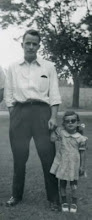
My father Tom Childers and Willis Allen, my best friend Gary’s father, were veterans of the Second World War, prototypes of what we have come to call “the Greatest Generation.” Raised in modest circumstances during the Great Depression, with little in the way of social or economic advantages, they fought and survived the war, returned home, had families, and built successful careers. They prospered, joined social clubs, watched their sons play Little League, took their families on vacations to Florida. They were model veterans, model family men.
But for Tom and Willis and many other men who returned from World War II, there was another, more complex and unsettling reality that lurked below the glossy surface of the Greatest Generation storyline. The men and women of that generation deserve all the testimonials they receive, but the uncomplicated, reassuring portrayal of their experiences found in Tom Brokaw’s best-selling book and in our public discourse has become more than a tribute to a passing generation; it has become our public memory of “the good war” and its aftermath. Indeed, it has been repeated so often in public commemorations that it has become almost an incantation, more liturgical than historical.
I thought of Willis and Tom earlier this month as I watched dignitaries and aged veterans gather in Normandy to commemorate the fateful D-Day landings of June 6, 1944. Never mentioned in such ceremonies or in the vast media attention devoted to the “Greatest Generation” is another battle our fathers waged. That battle was not fought in the fields of Europe or the jungles of the South Pacific but in towns and cities all across America, sometimes in highly public spaces - hospitals and courtrooms - but more often in parlors, kitchens, and bedrooms. As many veterans and their families would discover, the last daunting challenge of the war, for those fortunate enough to survive it, was attempting to resume a life interrupted and forever changed by war.
I wonder how many of us were part of the war our fathers continued to fight in the isolation of our homes.
Click on the title for a link to the entire article
Subscribe to:
Posts (Atom)